How RNG INTERNATIONAL, INC. Is Building Its Position in the Global Business Landscape
Discover how RNG INTERNATIONAL, INC. is developing its business position through renewable energy products, international trade, product innovation, and global market opportunities.
The global business landscape is changing rapidly. Technology, international trade, sustainability, and changing consumer expectations are influencing how companies develop their strategies and compete across borders. Businesses that understand these changes have opportunities to expand their reach, develop stronger customer relationships, and establish themselves in competitive industries. One company attracting attention in the renewable energy and portable power equipment space is RNG INTERNATIONAL, INC., which is associated with the Renogy brand and its range of solar energy products.
RNG INTERNATIONAL, INC. operates in a business environment where renewable energy solutions, portable electricity, battery storage, and solar equipment are becoming increasingly relevant. As individuals and businesses look for flexible ways to access electricity, companies operating in this sector have opportunities to serve residential, commercial, outdoor, and mobile-energy markets. Building a position in the global marketplace requires more than simply offering products. It involves developing reliable supply chains, understanding customer requirements, maintaining product quality, and responding to changing industry expectations.
This article explores the company's business identity, its connection with renewable energy, international market opportunities, product development, customer-focused strategies, and the challenges that can influence its future growth.
Understanding RNG INTERNATIONAL, INC.
Understanding a company's position in the global business landscape begins with identifying its business activities, industry connections, and market presence. RNG INTERNATIONAL, INC. is identified in U.S. regulatory and product-certification records as an Ontario, California-based company involved in the renewable energy and power equipment sector. Public regulatory documentation identifies the company in connection with products such as portable power stations and rechargeable batteries. These records provide useful information about its connection with the energy equipment industry, although they should not be confused with a complete public financial or corporate profile.
The company operates in an industry where technological development and changing energy requirements are creating new commercial opportunities. Consumers increasingly look for alternatives to conventional electricity sources, particularly when they need portable power, backup electricity, or off-grid energy systems. This creates opportunities for businesses involved in solar panels, battery storage, portable power stations, and related equipment. Establishing a competitive position in this environment requires more than simply selling products. Companies must understand their customers, maintain dependable product standards, manage distribution networks, and respond to changing market conditions.
The Company's Connection With Renewable Energy
Renewable energy has become an important part of discussions about the future of global electricity. Solar power, in particular, offers an alternative to traditional energy sources because it converts sunlight into usable electricity without requiring continuous fuel consumption. Businesses connected with solar technology have opportunities to serve homeowners, outdoor enthusiasts, commercial operators, and organizations that require dependable energy systems. RNG INTERNATIONAL, INC.'s documented involvement with portable power equipment places it within this wider commercial environment.
The broader Renogy brand provides additional context for understanding this market. Renogy is associated with solar products, batteries, and off-grid energy systems designed to make sustainable energy more accessible. The business began in 2010 and has developed products for people interested in reducing their dependence on conventional grid electricity. This industry context helps explain why portable power and solar technology are commercially relevant. Customers who live in remote locations, travel in recreational vehicles, operate boats, or prepare for electricity interruptions may benefit from flexible energy solutions.
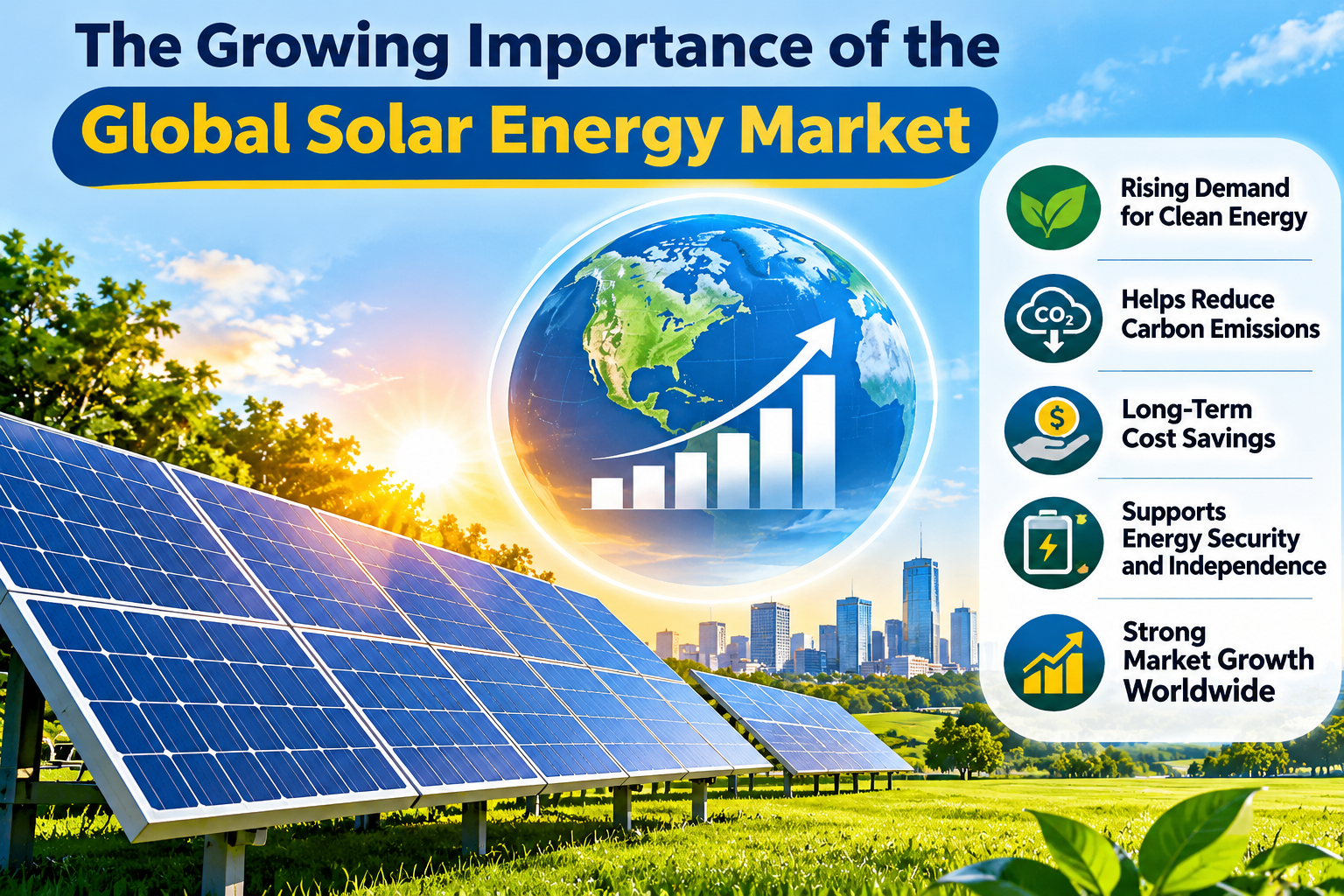
The Growing Importance of the Global Solar Energy Market
The renewable energy market is attracting attention from governments, investors, manufacturers, and consumers around the world. Rising electricity requirements, environmental concerns, and interest in energy independence are encouraging the development of new power technologies. Solar energy has an important role in this transition because solar equipment can be installed in different environments, from residential rooftops to remote commercial locations. Businesses operating in this sector can develop products for customers who want greater control over their electricity consumption.
3.1 Increasing Demand for Clean Energy
One of the important factors supporting the solar energy industry is the growing interest in cleaner electricity generation. Consumers are becoming more aware of the environmental impact of conventional energy sources and are exploring practical ways to reduce their dependence on them. Solar panels, battery storage systems, and portable power stations can help customers use electricity more flexibly. For example, a homeowner may install solar panels to generate electricity during the day, while an outdoor traveler may use a portable power station to operate essential electronic equipment.
Businesses that understand these different requirements can create products that address specific customer needs. This creates opportunities for companies such as RNG INTERNATIONAL, INC. to participate in a market where convenience, reliability, and energy independence are increasingly important purchasing considerations. As renewable energy becomes more familiar to consumers, demand for accessible and easy-to-use equipment may create additional opportunities for industry participants.
Developing a Diverse Product Portfolio
A diverse product portfolio can help an energy company serve customers with different requirements. Not every customer needs the same electricity solution. A homeowner may require a complete rooftop solar system, while someone travelling in an RV may prefer compact solar panels and a portable battery. Commercial customers might need larger storage capacity, charging equipment, or customized power configurations. Companies that offer compatible products across these categories can make it easier for customers to find solutions that match their requirements.
This approach also creates opportunities to develop relationships with customers who may purchase additional equipment as their energy needs change. Product diversity can help businesses reach multiple customer segments and reduce their dependence on a single product category. However, a large catalogue is not automatically an advantage. Companies must ensure that products are compatible, reliable, and supported by clear technical information.
4.1 Solar Panels, Batteries, and Portable Power Solutions
Solar panels, batteries, charge controllers, inverters, and portable power stations are important components of the off-grid energy ecosystem. Each component performs a different function, but together they can form an integrated electricity solution. Solar panels generate electricity, charge controllers help regulate charging, batteries store energy, and inverters convert electricity into a form suitable for compatible appliances.
For businesses operating in this segment, offering complementary products can create a more complete customer experience. Customers may prefer purchasing compatible equipment from one established brand instead of researching multiple unrelated manufacturers. However, product diversity must be supported by clear specifications, compatibility information, and dependable quality control. A thoughtful portfolio should balance variety with simplicity, helping customers choose suitable equipment without unnecessary confusion.
Innovation and Technology as Growth Drivers
Innovation is one of the most important factors influencing competitiveness in the renewable energy industry. Battery efficiency, charging performance, monitoring systems, product durability, and equipment design can all affect how customers evaluate energy products. Companies that invest in research and development have opportunities to improve existing solutions and introduce products that respond to emerging requirements.
Technology is not limited to the physical design of solar equipment. Software applications, wireless connectivity, and smart monitoring features are becoming increasingly important parts of the customer experience. These technologies allow customers to monitor battery levels, charging performance, and energy consumption through connected devices. For RNG INTERNATIONAL, INC., remaining competitive in this environment means understanding how product innovation, equipment compatibility, and digital functionality can contribute to customer satisfaction.
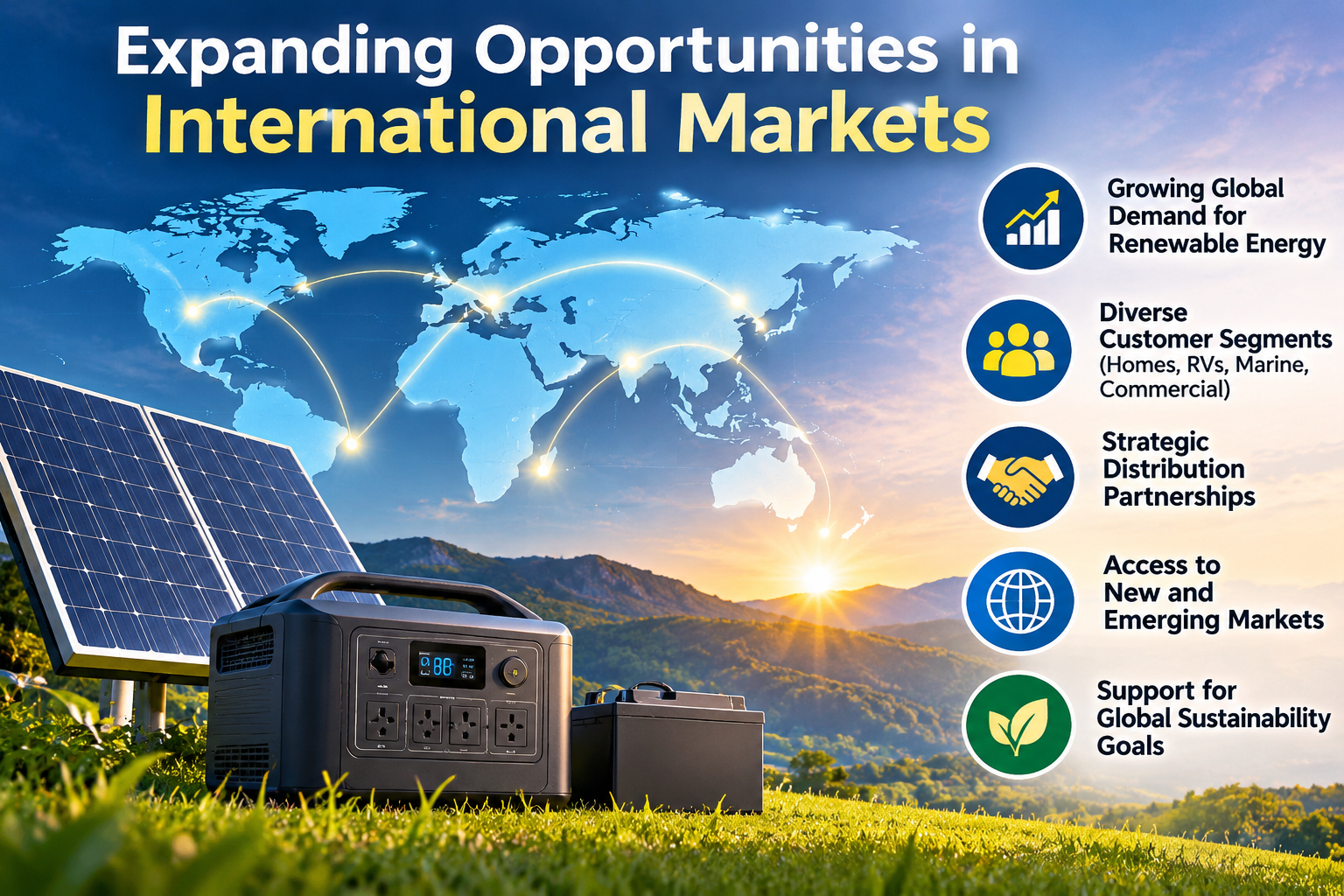
Expanding Opportunities in International Markets
International expansion offers businesses opportunities to reach customers beyond their domestic markets. Renewable energy products have applications in many countries because electricity requirements exist across residential, commercial, agricultural, transportation, and outdoor industries. However, international growth requires a detailed understanding of regional purchasing behaviour, technical requirements, import procedures, and distribution arrangements.
The international renewable energy market also creates opportunities through different customer segments. In some regions, consumers may be interested in reducing household electricity costs, while others may need backup power because of unreliable electricity infrastructure. Outdoor recreation markets create another opportunity for compact solar equipment and portable batteries. Businesses that understand these differences can develop more effective product positioning and marketing strategies.
International expansion is not simply about shipping products overseas; it involves building a dependable system for reaching customers, providing information, and delivering after-sales support. A strong international presence develops gradually through customer confidence, reliable distribution, and consistent product performance.
Building a Strong Global Supply Chain
A reliable supply chain is essential for businesses involved in manufacturing, importing, distributing, and selling energy equipment. Solar panels, lithium batteries, electronic components, and charging devices often depend on international manufacturing and transportation networks. Any disruption in these networks can affect product availability, delivery schedules, and business costs.
For an energy equipment company, supply chain management is particularly important because customers often purchase multiple products that must work together. If one essential component becomes unavailable, customers may be unable to complete their planned installations. Businesses can reduce this risk by maintaining relationships with dependable suppliers, evaluating alternative sourcing arrangements, and improving inventory forecasting.
They must also consider international shipping costs, customs requirements, product packaging, and transportation safety. Strong supply chain management may not always be visible to customers, but it has a direct influence on the quality of the purchasing experience and the company's ability to compete internationally.
Customer experience plays a significant role in building a sustainable business reputation. Purchasing renewable energy equipment can be complicated, especially for people who are installing their first solar system. Customers may have questions about battery capacity, panel compatibility, charging time, installation requirements, and equipment maintenance. Clear product information and accessible support can make these decisions easier.
Product reliability is equally important because energy equipment is expected to perform when customers need electricity. A portable power station used during travel, for example, should provide dependable operation under its specified conditions. Customers also expect batteries, solar panels, and charging accessories to meet their advertised technical specifications.
Companies can support reliability through appropriate testing, transparent warranties, quality-control procedures, and accurate product descriptions. Positive customer experiences can encourage repeat purchases and recommendations, while unresolved product problems may damage brand credibility. For RNG INTERNATIONAL, INC., customer trust is therefore an important consideration in developing a stronger business position.
Digital commerce has transformed how renewable energy businesses connect with customers. Instead of depending entirely on traditional retailers, companies can use online platforms to introduce products, explain technical features, and reach buyers in different geographical markets. A well-designed e-commerce experience allows customers to compare solar panels, batteries, inverters, and portable power stations before making purchasing decisions.
Modern digital marketing involves more than publishing product advertisements. Search engine optimization, educational blog articles, product demonstrations, email campaigns, social media content, and customer reviews can all contribute to online visibility. Renewable energy products often require detailed explanations because customers need to understand technical specifications before purchasing them.
Educational content can help explain how solar systems work, how battery capacity is measured, and how customers can select compatible equipment. Businesses that provide useful information alongside product promotions can create a more trustworthy online presence. This strategy can help RNG INTERNATIONAL, INC. and businesses operating in its market reach customers who are actively researching renewable energy solutions.
Sustainability and Environmental Responsibility
Sustainability is becoming an important consideration for businesses across different industries. Consumers increasingly pay attention to how products are manufactured, transported, used, and eventually disposed of. Companies connected with renewable energy have an opportunity to support environmental goals by developing products that help customers use cleaner electricity.
However, genuine environmental responsibility requires attention to the entire product lifecycle rather than focusing only on the benefits of renewable electricity. Battery manufacturing, electronic waste, packaging materials, and transportation emissions are important considerations for energy equipment companies. Businesses must think about how batteries can be safely collected, recycled, or disposed of after their useful life.
They should also consider product durability because longer-lasting equipment may reduce the frequency of replacement. Responsible sourcing and transparent environmental communication can help companies build stronger relationships with environmentally conscious customers. For RNG INTERNATIONAL, INC., participating in the renewable energy industry creates an opportunity to support sustainable energy adoption while recognizing the environmental responsibilities associated with electronic products.
Competition in the Renewable Energy Industry
The renewable energy industry is competitive, with businesses offering a wide variety of solar panels, batteries, inverters, chargers, and complete energy systems. Customers can compare products from established international manufacturers as well as smaller specialized suppliers. This competition encourages companies to improve their products, pricing, customer service, and distribution strategies.
For RNG INTERNATIONAL, INC., developing a stronger position requires attention to the factors that influence purchasing decisions. Product quality, technical specifications, price transparency, warranty arrangements, and customer support can all influence brand preference. Companies may also differentiate themselves through specialized products designed for recreational vehicles, marine applications, outdoor activities, or residential energy systems.
A business that understands a particular customer segment can develop more relevant solutions than a competitor offering only generic equipment. Long-term competitiveness depends on consistently delivering value rather than competing solely through discounts or promotional campaigns.
Future Growth Opportunities for RNG INTERNATIONAL, INC.
The future of the renewable energy industry presents several opportunities for companies involved in solar equipment and portable power technology. One important opportunity is the increasing interest in energy storage. Solar panels can generate electricity when sunlight is available, but customers may also need electricity during evenings or periods of limited sunlight. Battery storage systems help address this requirement by storing energy for later use.
Another opportunity involves portable power applications. Recreational vehicles, boats, outdoor activities, remote workplaces, and emergency preparedness create demand for electricity equipment that can operate outside conventional buildings. Businesses can respond by developing products that are compact, durable, easy to monitor, and compatible with renewable energy sources.
International market development provides another potential growth path. Different countries have different electricity needs, purchasing patterns, and renewable energy policies. Businesses that study these differences can identify suitable customer segments and develop products for specific markets. For RNG INTERNATIONAL, INC., the ability to combine product development, operational discipline, and international market understanding will be important in determining its future commercial opportunities.
Conclusion
RNG INTERNATIONAL, INC. operates in a business environment shaped by renewable energy development, international trade, technological innovation, and changing consumer expectations. Its appearance in U.S. regulatory and product-certification records connects it with the portable power and rechargeable battery industry, providing a useful starting point for understanding its market activities.
The renewable energy sector offers meaningful opportunities, but businesses must be prepared to manage competition, supply chain challenges, and changing international requirements. Companies that invest in innovation, develop dependable partnerships, and understand local customer needs can improve their ability to compete across different markets.
For RNG INTERNATIONAL, INC., future success will depend on how effectively it responds to these industry developments while maintaining a clear focus on quality and customer value. As global interest in energy independence continues to create new commercial possibilities, the company operates in an industry with considerable potential for further development.
Frequently Asked Question
What is RNG INTERNATIONAL, INC.?
RNG INTERNATIONAL, INC. is a California-based company identified in public regulatory records in connection with power equipment and rechargeable battery products. It has appeared in regulatory documentation concerning portable power equipment and rechargeable batteries.
What industry is RNG INTERNATIONAL, INC. associated with?
The company is associated through public product and regulatory records with the renewable energy and power equipment industry. This market includes portable power stations, rechargeable batteries, solar energy equipment, and related electrical products.
How does renewable energy create opportunities for RNG INTERNATIONAL, INC.?
Growing interest in solar electricity, energy storage, and portable power creates opportunities for businesses operating in this sector. Customers increasingly seek flexible electricity solutions for homes, travel, commercial applications, and off-grid environments.
Why is innovation important for RNG INTERNATIONAL, INC.?
Innovation helps businesses improve product performance, battery technology, charging efficiency, and equipment compatibility. It can also support the development of smart monitoring features and more convenient energy management solutions.
What could influence the future growth of RNG INTERNATIONAL, INC.?
Several factors could influence its future growth, including international market demand, product quality, technological development, supply chain reliability, regulatory compliance, customer satisfaction, and competition in the renewable energy industry.