Notice: Function Elementor\Core\Experiments\Manager::warn_removed_or_hidden_dependency was called incorrectly. Feature mega-menu depends on hidden experiment nested-elements. Please see Debugging in WordPress for more information. (This message was added in version 4.3.2.) in /home/u327571181/domains/times.software/public_html/wp-includes/functions.php on line 6260 Woodpecker Review 2026: Is It the Best Cold Email Outreach Tool for Businesses? - Times Software
Woodpecker Review 2026: Is It the Best Cold Email Outreach Tool for Businesses?
Discover our detailed Woodpecker Review 2026 and find out whether Woodpecker is the best cold email outreach tool for businesses. This review covers its key features, pricing, deliverability, automation capabilities, integrations, pros and cons, and how it compares to leading competitors. Learn if Woodpecker is the right solution to scale your outbound sales and lead generation efforts in 2026.
Woodpecker is a dedicated cold email outreach and sales engagement platform designed to help businesses automate prospecting campaigns while maintaining strong email deliverability. Since its launch, the platform has gained a reputation among sales teams, agencies, recruiters, and SaaS companies for making cold outreach easier and more scalable. In 2026, Woodpecker continues to focus heavily on inbox placement, automated follow-ups, and prospect engagement rather than trying to become an all-in-one CRM solution. According to the company's official platform, Woodpecker now includes features such as email verification, warm-up tools, deliverability monitoring, adaptive sending, LinkedIn outreach capabilities, and access to a large B2B lead database.
The platform is built around a simple idea: sales representatives should spend less time manually sending emails and more time having meaningful conversations with prospects. Instead of manually tracking follow-ups, monitoring replies, and managing large prospect lists, users can automate the process through intelligent email sequences. This automation helps businesses maintain consistency while ensuring prospects receive timely messages. The result is a more efficient outreach strategy capable of generating meetings, leads, and revenue without increasing administrative workload.
Brief Background of the Platform
Woodpecker started as a specialized cold email solution and gradually evolved into a broader sales engagement platform. Its growth has largely been driven by a strong emphasis on email deliverability. Unlike many outreach tools that focus primarily on volume, Woodpecker prioritizes maintaining sender reputation and ensuring messages land in primary inboxes instead of spam folders.
Who Should Use Woodpecker?
Woodpecker is ideal for:
B2B sales teams
SaaS companies
Lead generation agencies
Recruiters
Consultants
Freelancers
Startup founders
Businesses that rely heavily on outbound prospecting often find Woodpecker particularly valuable because of its automation capabilities and deliverability-focused infrastructure.
Why Cold Email Outreach Still Matters in 2026
Despite the rise of social selling, AI-powered chatbots, and inbound marketing strategies, cold email remains one of the most effective methods for initiating conversations with potential customers. Businesses continue to invest heavily in outbound sales because it provides direct access to decision-makers who may not actively search for solutions online.
Cold email offers a unique advantage: control. Rather than waiting for prospects to discover a business through search engines or advertisements, companies can proactively reach out to their target audience. When personalized properly, cold emails create opportunities for meaningful conversations that often lead to partnerships, meetings, and sales. Modern cold email platforms like Woodpecker have evolved to support this process through automation, personalization, and deliverability optimization.
The Role of Personalized Outreach
The days of sending generic mass emails are over. Successful outreach campaigns in 2026 depend on personalization. Prospects expect messages that demonstrate genuine understanding of their business challenges and objectives. Woodpecker helps achieve this through dynamic personalization fields, custom variables, conditional sequences, and A/B testing features that allow marketers to continuously improve messaging performance.
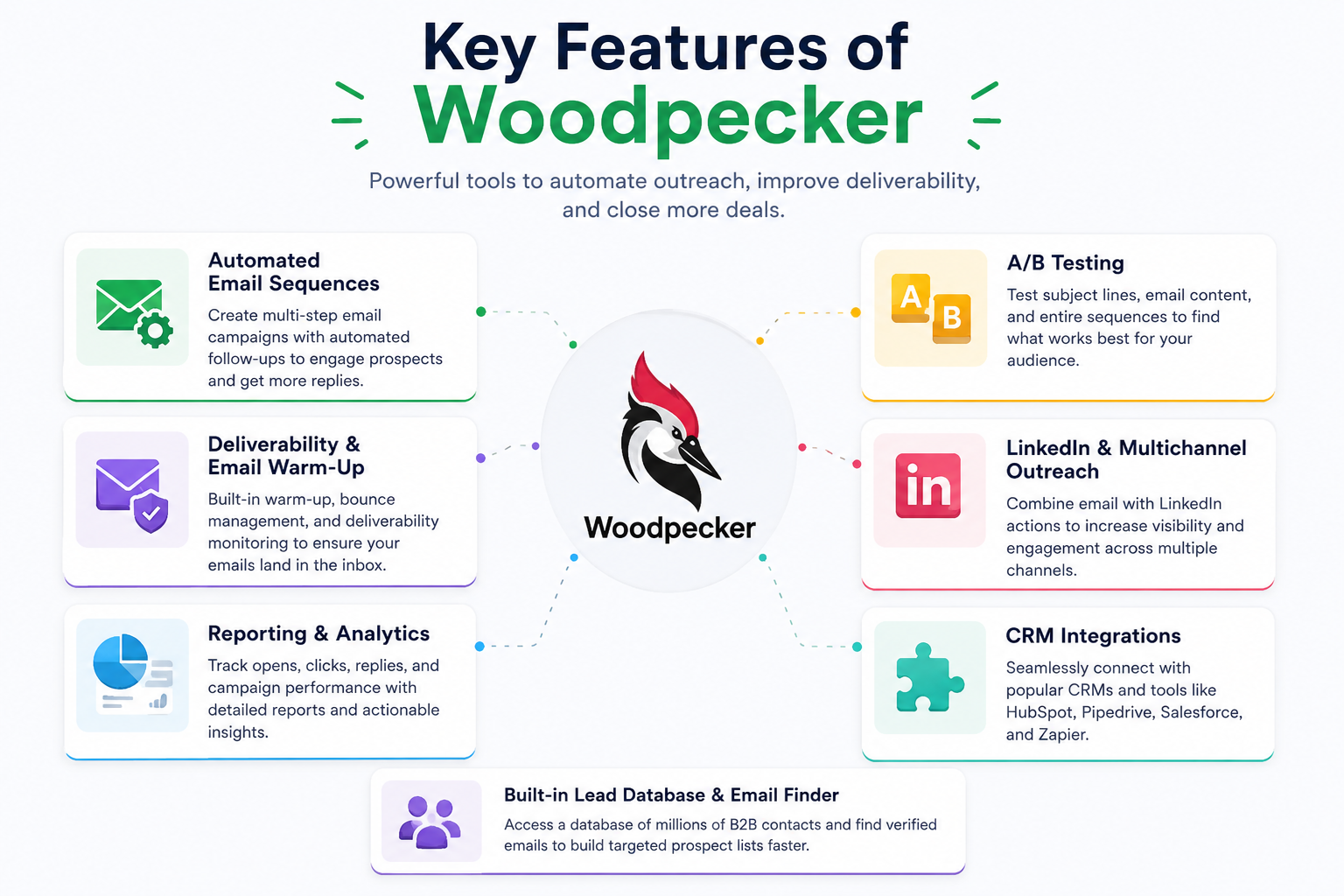
Key Features of Woodpecker
Automated Email Sequences
One of Woodpecker's strongest features is its email sequence automation. Users can create multi-step campaigns that automatically send follow-up messages based on prospect behavior. If a recipient opens an email but does not respond, Woodpecker can trigger a follow-up. If they reply, the sequence stops automatically.
This level of automation saves countless hours for sales professionals. Instead of manually tracking who responded and who didn't, teams can focus on conversations with interested prospects. The automation engine also supports advanced conditions and logic, allowing users to build sophisticated workflows tailored to specific outreach goals.
Deliverability and Email Warm-Up
Deliverability is arguably Woodpecker's greatest strength. The platform includes several tools designed to improve inbox placement:
Email warm-up
Bounce detection
Deliverability monitoring
Adaptive sending
Email verification
These features help users build sender reputation gradually while minimizing the risk of spam complaints. According to Woodpecker's official platform, adaptive sending automatically adjusts sending behavior to remain within safe limits and maintain strong deliverability rates.
A/B Testing Capabilities
Testing is essential for optimizing outreach campaigns. Woodpecker includes A/B testing functionality that allows users to compare subject lines, email content, and sequence variations. This enables teams to identify which messaging resonates most effectively with their target audience.
Rather than relying on assumptions, businesses can make data-driven decisions. Small improvements in open rates and reply rates can have a significant impact on campaign performance over time.
LinkedIn and Multichannel Outreach
In 2026, successful outreach extends beyond email. Woodpecker now supports LinkedIn actions alongside traditional email campaigns. Users can combine LinkedIn profile visits, connection requests, direct messages, and InMails with email outreach sequences.
This multichannel approach increases visibility and improves the likelihood of receiving responses from busy decision-makers.
CRM Integrations
Woodpecker integrates with popular CRM systems, including:
HubSpot
Salesforce
Pipedrive
Zapier-powered applications
These integrations streamline workflows by synchronizing prospect data and communication history across multiple platforms.
Woodpecker Pricing in 2026
Pricing remains a critical consideration when evaluating any outreach platform. Woodpecker currently offers several pricing tiers based on prospect volume and outreach requirements. Official pricing starts at approximately $29 per month for entry-level plans and scales significantly for larger operations.
Pricing Comparison Table
Plan
Monthly Price
Prospect Limit
Best For
Starter
$29
500 prospects
Freelancers and startups
Growth
$84
3,000 prospects
Growing sales teams
Scale
$188
10,000 prospects
Agencies and larger teams
Max
Custom / Enterprise
Unlimited
Enterprise organizations
Pricing may change over time. Check the official website for the latest details.
Starter Plan
The Starter plan provides a low-cost entry point for small businesses and solo operators. It includes basic automation, prospect management, and essential deliverability tools.
Growth Plan
The Growth plan introduces advanced automation, higher prospect limits, A/B testing, and additional support resources, making it suitable for expanding sales teams.
Scale Plan
The Scale plan is designed for agencies and high-volume outbound operations. It offers team collaboration features, priority support, and significantly larger prospect capacities.
User Interface and Ease of Use
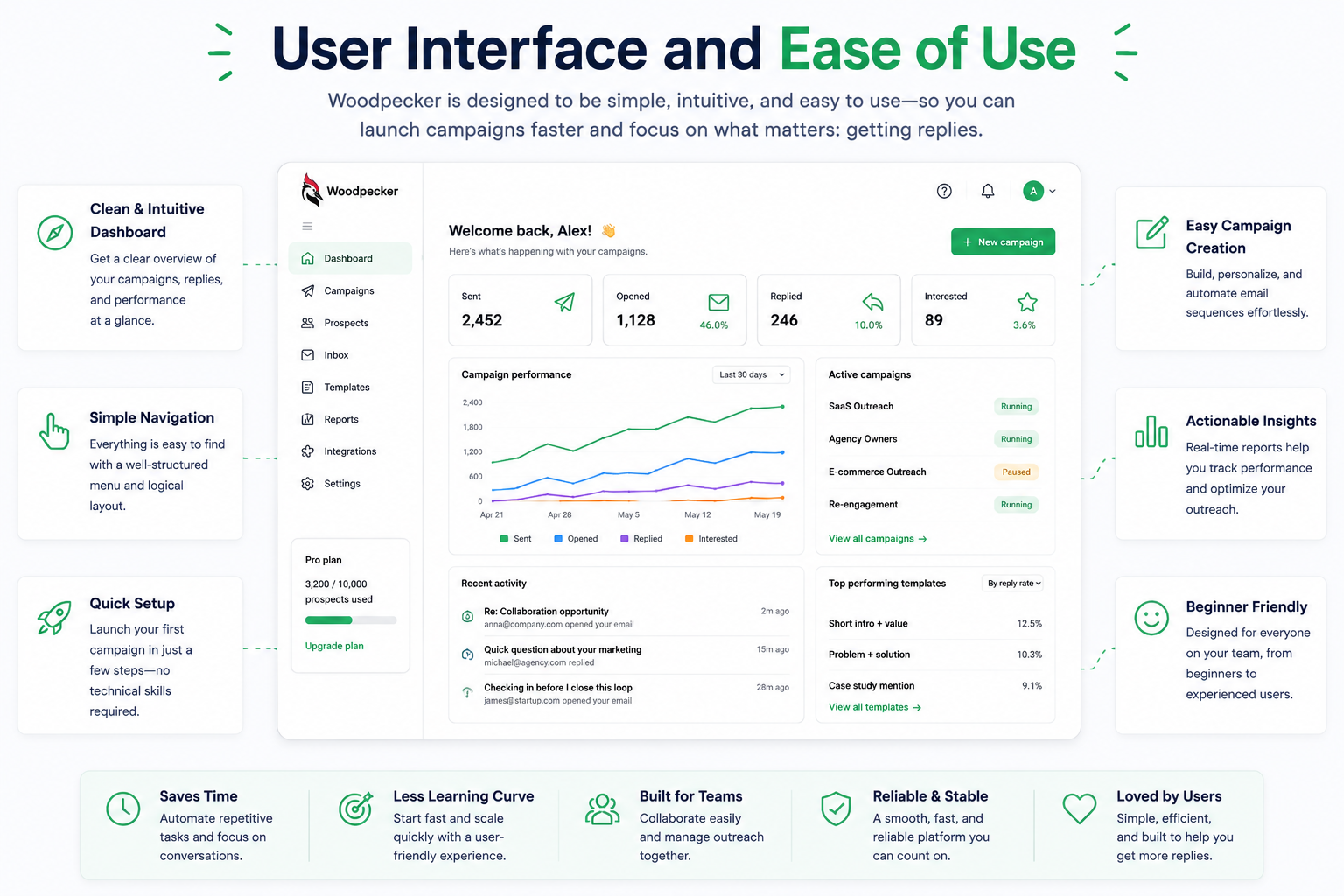
A common challenge with sales engagement platforms is complexity. Fortunately, Woodpecker maintains a relatively clean and intuitive interface. Most users can launch their first campaign within a few hours of onboarding. Navigation is straightforward, and key functions such as campaign creation, prospect management, and analytics are easily accessible.
The dashboard provides a clear overview of campaign performance, including opens, clicks, replies, and deliverability metrics. New users appreciate the guided setup process, while experienced sales professionals benefit from advanced configuration options. This balance between simplicity and functionality is one of the reasons Woodpecker remains popular among small and medium-sized businesses.
Campaign Creation Experience
Building campaigns in Woodpecker is a streamlined process. Users can upload prospect lists, personalize messaging, configure automation rules, and launch campaigns with minimal technical expertise. The sequence builder offers enough flexibility to create sophisticated outreach flows without overwhelming users.
Personalization variables make it easy to tailor emails for each recipient. Combined with conditional follow-up logic, businesses can create highly relevant outreach experiences that feel personal rather than automated. This capability plays a significant role in improving response rates and building trust with prospects.
Deliverability remains the defining characteristic of Woodpecker. Many competing platforms prioritize volume, but Woodpecker prioritizes inbox placement. This distinction is important because sending thousands of emails means little if they never reach recipients' inboxes.
Independent reviews consistently highlight Woodpecker's focus on sender reputation, email warm-up, bounce management, and adaptive sending mechanisms. These tools work together to reduce spam risk and maintain healthy sending behavior. Businesses operating in competitive industries often choose Woodpecker specifically because of its strong deliverability track record.
Reporting and Analytics
Data is essential for continuous improvement. Woodpecker provides detailed analytics covering:
Open rates
Reply rates
Click-through rates
Bounce rates
Campaign performance
Deliverability metrics
These insights help users identify strengths and weaknesses within their outreach strategies. Instead of guessing what works, teams can refine subject lines, messaging, and targeting based on actual performance data.
Instantly is often favored by agencies running extremely high-volume campaigns. It offers unlimited inbox support and aggressive scaling capabilities. Woodpecker, however, tends to outperform in deliverability management and structured automation. Businesses prioritizing inbox placement often prefer Woodpecker, while agencies focused on volume may lean toward Instantly.
Woodpecker vs Lemlist
Lemlist excels in advanced personalization, including custom images and video outreach. Woodpecker focuses more heavily on email automation and deliverability. Teams seeking creative personalization may prefer Lemlist, while businesses prioritizing reliable outreach often choose Woodpecker.
Woodpecker vs Saleshandy
Saleshandy offers competitive pricing and strong email outreach capabilities. Woodpecker generally provides more advanced deliverability monitoring and automation options, making it attractive for businesses with long-term outbound strategies.
Who Should Choose Woodpecker in 2026?
Woodpecker is best suited for businesses that prioritize quality outreach over sheer sending volume. Companies relying on cold email as a core lead generation channel will appreciate its focus on deliverability and automation. Small businesses, agencies, consultants, SaaS startups, and sales teams can all benefit from its capabilities.
Organizations looking for cutting-edge AI personalization may find alternative solutions more appealing. However, businesses that value reliability, inbox placement, and proven outbound workflows will likely find Woodpecker to be an excellent investment.
Final Verdict
Woodpecker remains one of the strongest cold email outreach platforms available in 2026. Its deliverability-first approach, robust automation tools, CRM integrations, and multichannel outreach capabilities make it highly competitive in a crowded market. While newer competitors are introducing more AI-driven features, Woodpecker continues to excel in the areas that matter most for successful outbound campaigns: reaching inboxes, generating replies, and creating sales opportunities.
For businesses seeking a dependable outreach platform with a proven track record, Woodpecker remains a top contender.
Conclusion
The cold email landscape continues to evolve, but the fundamentals remain unchanged. Businesses need tools that help them reach prospects effectively, automate repetitive tasks, and maintain strong sender reputations. Woodpecker succeeds in all three areas. Its emphasis on deliverability, combined with automation, personalization, and analytics, creates a powerful platform capable of supporting both small businesses and large sales organizations.
While it may not offer every cutting-edge AI feature available today, Woodpecker delivers where it counts. If your goal is to build consistent outbound pipelines, improve response rates, and scale prospecting efforts responsibly, Woodpecker deserves serious consideration in 2026.
Frequently Asked Question
Is Woodpecker suitable for small businesses?
Yes. Woodpecker’s Starter plan is affordable and provides enough functionality for freelancers, consultants, and small businesses beginning their outreach efforts.
Does Woodpecker support LinkedIn outreach?
Yes. Woodpecker now includes LinkedIn actions such as connection requests, profile visits, and messaging alongside email campaigns.
How much does Woodpecker cost in 2026?
Pricing starts around $29 per month and scales based on prospect volume and advanced features. Enterprise options are also available.
What makes Woodpecker different from other cold email tools?
Its strongest differentiator is its focus on email deliverability through warm-up tools, adaptive sending, bounce protection, and monitoring systems.
Is Woodpecker worth the investment?
For businesses that rely heavily on outbound prospecting, Woodpecker’s automation and deliverability capabilities often justify the investment through improved response rates and lead generation results.