Notice: Function Elementor\Core\Experiments\Manager::warn_removed_or_hidden_dependency was called incorrectly. Feature mega-menu depends on hidden experiment nested-elements. Please see Debugging in WordPress for more information. (This message was added in version 4.3.2.) in /home/u327571181/domains/times.software/public_html/wp-includes/functions.php on line 6260 The Role of Ocean Sustainability and the Impact of Free the Ocean, LLC - Times Software
The Role of Ocean Sustainability and the Impact of Free the Ocean, LLC
The ocean is one of the most powerful forces on Earth. Covering more than 70% of the planet’s surface, oceans regulate climate, support biodiversity, produce oxygen, and provide livelihoods for millions of people around the world. Yet, despite their importance, marine ecosystems are facing enormous pressure from pollution, climate change, overfishing, and human activity. Among these challenges, plastic pollution has become one of the most visible and damaging threats. Every bottle, wrapper, or piece of discarded plastic that reaches waterways has the potential to travel thousands of miles and harm marine life.
Ocean sustainability has become a critical global mission because protecting the ocean means protecting the future of the planet. Sustainable ocean practices focus on maintaining healthy marine ecosystems while allowing communities and industries to benefit from ocean resources responsibly. This requires a combination of environmental awareness, innovative solutions, responsible consumer behavior, and strong partnerships between organizations, governments, and individuals.
One organization working to address ocean plastic pollution is Free the Ocean, LLC. The company has created a unique approach that combines education, community participation, and sustainable shopping to help remove plastic from oceans and coastlines. According to Free the Ocean, its global community activities and partnerships have helped fund the removal of tens of millions of pieces of plastic from marine environments.
Understanding the Importance of Ocean Sustainability
Why Healthy Oceans Matter for the Planet
Healthy oceans are essential for maintaining balance in the Earth’s natural systems. They act like a giant life-support system, absorbing carbon dioxide, influencing weather patterns, and supporting countless species. Coral reefs, mangroves, sea grass ecosystems, and open ocean habitats provide homes for marine animals while also protecting coastal communities from storms and erosion.
When oceans become polluted or damaged, the effects extend far beyond marine environments. Contaminated oceans affect seafood supplies, tourism industries, coastal economies, and even human health. Microplastics, which are tiny fragments created when larger plastics break down, have become a growing concern because they can enter marine food chains and eventually reach humans.
Ocean sustainability focuses on creating a balance between human needs and environmental protection. Instead of viewing the ocean as an unlimited resource, sustainable approaches recognize that marine ecosystems have limits. Responsible fishing, reducing pollution, protecting habitats, and supporting conservation efforts are all important parts of maintaining ocean health.
The challenge is that ocean problems are often invisible until they become severe. A plastic bag floating on the surface represents only a small part of a much larger issue. Beneath the water, countless pieces of debris can affect fish, turtles, seabirds, and other marine creatures. Protecting oceans requires action before pollution becomes impossible to reverse.
The Growing Threat of Ocean Plastic Pollution
Plastic pollution has become one of the biggest environmental challenges facing marine ecosystems. Unlike natural materials that break down over time, many plastics can remain in the environment for hundreds of years. They can be carried through rivers, beaches, and coastal areas before eventually entering the ocean.
Marine animals often mistake plastic waste for food. Sea turtles may confuse plastic bags with jellyfish, while seabirds can accidentally feed plastic fragments to their young. Fishing nets and other abandoned equipment, known as ghost gear, can trap and injure marine species for years after being lost.
The scale of the problem highlights why prevention is just as important as cleanup. Removing plastic after it enters the ocean is difficult and expensive. Creating systems that reduce plastic waste before it reaches waterways is a more effective long-term strategy.
Organizations like Free the Ocean focus on encouraging people to rethink everyday choices. By promoting plastic-free alternatives and supporting cleanup initiatives, the organization aims to create a connection between individual behavior and global environmental impact.
The Need for Sustainable Ocean Conservation Solutions
Moving Beyond Cleanup Toward Prevention
Ocean cleanup projects are valuable, but they are only one part of the solution. If society continues producing and disposing of plastic at current levels, cleanup efforts will constantly fight against a growing stream of new waste. Sustainable ocean conservation requires addressing the source of pollution.
Prevention begins with changing how products are designed, manufactured, purchased, and discarded. Businesses can reduce unnecessary packaging, consumers can choose reusable alternatives, and communities can improve waste management systems.
This approach is similar to fixing a leaking pipe instead of repeatedly cleaning up the water on the floor. Cleanup removes existing damage, but prevention stops the problem from continuing. Both strategies are necessary for meaningful progress.
Free the Ocean’s model reflects this idea by combining plastic removal with education and sustainable purchasing habits. The organization’s mission is built around three pillars: sustainability, education, and action.
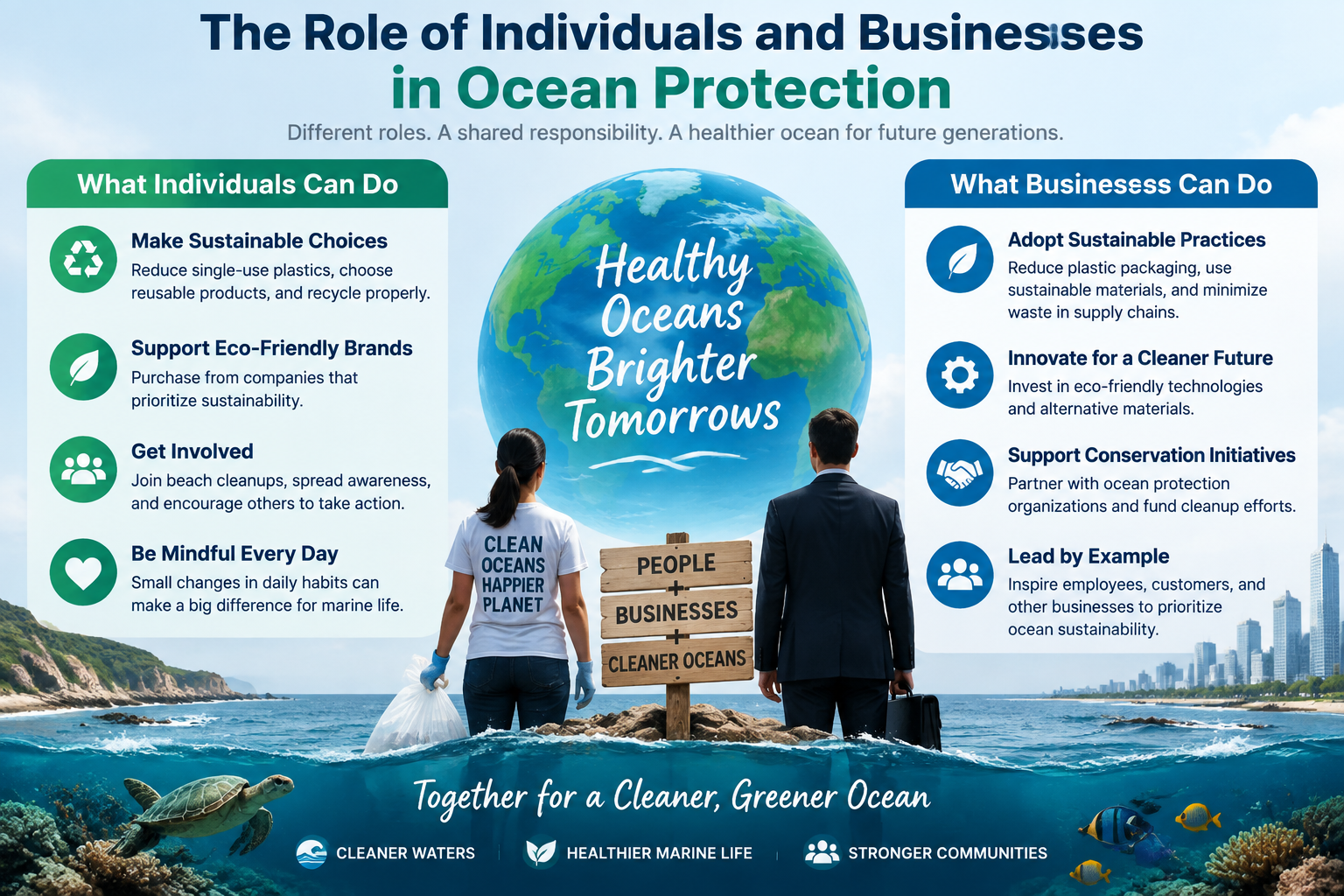
The Role of Individuals and Businesses in Ocean Protection
Many people believe environmental problems are too large for individual actions to matter. However, collective behavior creates powerful change. Millions of small choices made every day can influence product demand, business practices, and environmental policies.
Choosing reusable products, avoiding unnecessary plastic packaging, participating in cleanups, and supporting sustainable companies are practical steps individuals can take. These actions may appear small, but they create a ripple effect similar to a single drop creating waves across a pond.
Businesses also have a major responsibility. Companies influence supply chains, manufacturing processes, and consumer habits. Organizations that prioritize sustainability can help create markets for environmentally friendly products while encouraging other businesses to follow similar practices.
What Is Free the Ocean, LLC?
The Mission Behind Free the Ocean
Free the Ocean, LLC is an environmental organization focused on reducing ocean plastic pollution through community engagement and sustainable choices. Founded with the goal of giving people an easy way to contribute to ocean protection, the organization created a platform where simple actions can generate measurable environmental benefits.
The company believes that environmental action should be accessible to everyone. Instead of requiring large donations or specialized knowledge, Free the Ocean allows individuals to participate through everyday activities such as answering trivia questions and purchasing plastic-free products.
This approach transforms environmental responsibility from a complicated task into something simple and engaging. By connecting education with action, the organization helps people understand ocean issues while giving them practical ways to participate.
How Free the Ocean Creates Environmental Impact
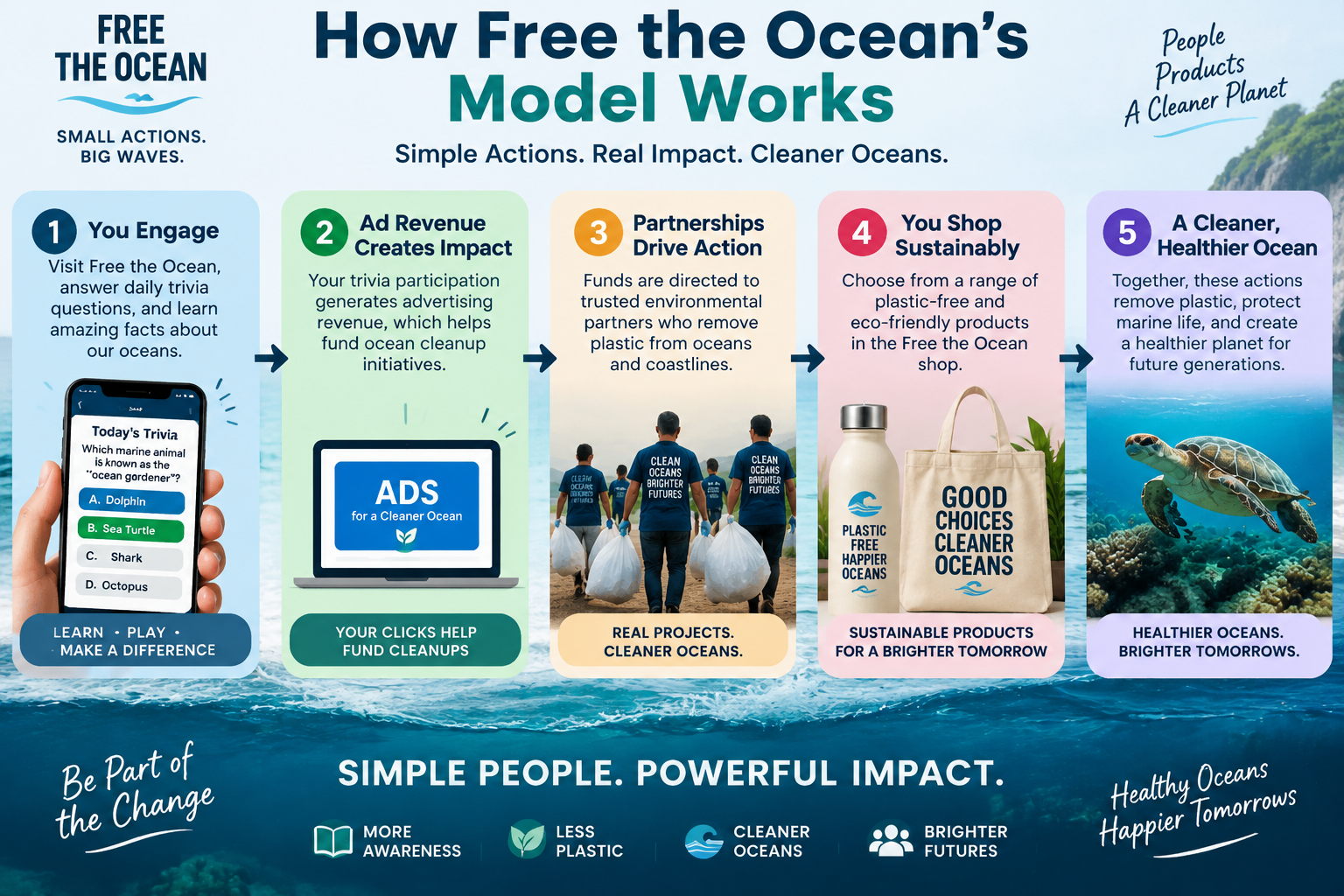
Free the Ocean creates impact through several interconnected programs. One of its most recognized initiatives involves daily trivia questions. When users participate, advertising revenue generated from those visits helps support organizations involved in removing plastic from oceans and coastlines.
The company also operates a sustainable marketplace offering plastic-free products. Purchases help support ocean cleanup efforts while encouraging consumers to replace disposable plastic items with environmentally friendly alternatives.
This combination of awareness and action is what makes the model unique. Instead of asking people only to donate or volunteer, Free the Ocean integrates sustainability into daily routines.
How Free the Ocean’s Model Works
Daily Trivia and Community Engagement
Education plays a major role in environmental protection. Many people want to help the planet but may not know where to start. Free the Ocean addresses this challenge by making learning about oceans fun and interactive.
Daily trivia encourages users to discover facts about marine ecosystems, pollution, and conservation. At the same time, participation contributes financially toward plastic removal programs.
This creates a relationship where knowledge leads to action. Someone who learns about ocean pollution may become more likely to reduce plastic use, support conservation programs, or encourage others to make sustainable choices.
The organization reports that its trivia-based model has helped fund significant plastic removal efforts through community participation.
Plastic-Free Products and Sustainable Shopping
Consumer choices have a direct effect on environmental outcomes. Every product purchased sends a message about what types of businesses and manufacturing practices society supports.
Free the Ocean’s marketplace focuses on plastic-free and sustainable alternatives designed for everyday life. Products include environmentally friendly household items, personal care products, and lifestyle goods.
The goal is not simply selling products but creating a pathway for people to reduce their dependence on harmful materials. Sustainable shopping becomes a form of environmental participation.
The Environmental Impact of Free the Ocean, LLC
Removing Plastic From Oceans and Coastlines
The measurable impact of environmental organizations is important because it shows whether actions are creating real change. Free the Ocean states that its community efforts have funded the removal of more than 70 million pieces of plastic from oceans and coastlines.
While removing millions of pieces of plastic does not solve the entire global pollution crisis, it demonstrates how organized community action can contribute to larger conservation goals.
Every piece removed represents a potential threat eliminated from marine ecosystems. More importantly, these efforts raise awareness and encourage people to think differently about plastic consumption.
Supporting Global Cleanup Partnerships
Free the Ocean works with environmental partners, including organizations such as Greater Good Charities and Parley for the Oceans, to support plastic removal and marine conservation activities.
Partnerships are essential because ocean pollution is a global issue requiring cooperation across countries and communities. No single organization can solve the problem alone.
By supporting experienced cleanup groups, Free the Ocean helps direct resources toward organizations actively working in affected areas.
The Connection Between Consumer Choices and Ocean Sustainability
How Small Actions Create Large Environmental Changes
Environmental change often begins with individual decisions. Choosing a reusable bottle instead of disposable plastic, refusing unnecessary packaging, or supporting sustainable companies may seem insignificant. However, when millions of people make similar choices, the combined effect becomes powerful.
Think of ocean sustainability as a massive puzzle. Every person contributes one piece. A single piece does not complete the picture, but without each piece, the image remains incomplete.
Organizations like Free the Ocean help people recognize that their daily habits matter. They transform environmental responsibility from an abstract idea into something practical.
Building a Culture of Responsible Consumption
Long-term ocean protection requires a cultural shift. Society must move away from the idea that convenience should always come before sustainability.
Responsible consumption means considering where products come from, how they are produced, and what happens after they are used. This mindset encourages people to value durability, reuse, and environmental impact.
Companies that promote sustainability help accelerate this cultural change by making better choices easier for consumers.
One of the biggest challenges in ocean sustainability is reducing dependence on single-use plastics. These products are convenient but often used for only minutes before becoming waste.
Creating alternatives requires innovation, investment, and changes in consumer behavior. Governments, businesses, and individuals must work together to reduce unnecessary plastic production.
Creating Long-Term Global Awareness
Awareness is another major challenge. Many people understand that plastic pollution exists but underestimate its impact or feel powerless to help.
Education initiatives are important because they transform awareness into action. By helping people understand the connection between their choices and ocean health, organizations can encourage meaningful behavior changes.
The Future of Ocean Conservation and Sustainable Innovation
Technology, Education, and Community-Based Solutions
The future of ocean conservation will depend on combining technology with human cooperation. Advanced recycling systems, improved waste management, sustainable materials, and data-driven conservation methods can all contribute to healthier oceans.
However, technology alone cannot solve environmental problems. Human behavior remains at the center of sustainability.
Community-based organizations like Free the Ocean demonstrate how education and participation can create measurable environmental impact. By making sustainability accessible, they encourage more people to become part of the solution.
Conclusion
Ocean sustainability is not just an environmental goal; it is a responsibility connected to the future of life on Earth. Healthy oceans support ecosystems, economies, and communities, making their protection essential for future generations.
Free the Ocean, LLC represents an example of how organizations can combine education, consumer action, and partnerships to address ocean plastic pollution. Through trivia programs, sustainable products, and funding for cleanup efforts, the company demonstrates that small actions can contribute to meaningful environmental progress.
Protecting oceans requires everyone’s involvement. Governments, businesses, organizations, and individuals all have a role to play. When millions of people make better choices, those choices create waves of positive change.
Frequently Asked Question
What is ocean sustainability?
Ocean sustainability refers to protecting marine ecosystems while allowing humans to responsibly use ocean resources. It focuses on reducing pollution, conserving marine life, and maintaining healthy oceans for future generations.
How does Free the Ocean help remove plastic pollution?
Free the Ocean supports plastic removal efforts through community participation, advertising-supported trivia activities, and purchases from its sustainable marketplace. Funds are directed toward organizations involved in ocean and coastline cleanup.
Can individual actions really help protect oceans?
Yes. Individual actions become powerful when millions of people participate. Reducing plastic use, choosing sustainable products, and supporting conservation organizations can contribute to larger environmental change.
What types of products does Free the Ocean offer?
Free the Ocean offers plastic-free and sustainable products designed to help consumers replace disposable plastic items with environmentally friendly alternatives.
Why is reducing plastic important for marine life?
Plastic pollution can injure marine animals, damage habitats, and introduce harmful materials into ocean ecosystems. Reducing plastic waste helps protect marine biodiversity and ocean health.