Ordnance Survey

Branding & Authority Strategy of Ordnance Survey Explained

Discover how Ordnance Survey built its global reputation through a powerful branding and authority strategy. This article explains how Ordnance Survey combines trusted geospatial data, government backing, digital innovation, and strategic partnerships to maintain its position as the leading mapping authority in Great Britain.

Understanding Ordnance Survey

What Is Ordnance Survey?

When discussing geospatial authority and mapping credibility, few organizations carry the same reputation as Ordnance Survey (OS). It is the national mapping agency for Great Britain and one of the world’s most respected producers of geographic information. Established in 1791, the organization has been mapping the country for more than two centuries, building an extraordinary reputation for reliability, precision, and innovation.

Today, Ordnance Survey is far more than a traditional map publisher. It manages the National Geographic Database, containing more than 600 million geospatial features across Britain, continuously updated thousands of times every day. That means every road, building, field boundary, and geographic feature is cataloged with remarkable precision. This massive dataset powers everything from emergency services navigation to urban planning, environmental management, and logistics operations.

The organization operates as a government-owned company, accountable to the UK government while functioning commercially in the geospatial market. This hybrid structure gives OS a unique positioning: it is both a public institution and a competitive data provider.

Branding-wise, Ordnance Survey has something most companies can only dream of: institutional authority. People trust its maps because they have been used by the military, engineers, government planners, and outdoor explorers for generations. This long-term trust forms the foundation of its branding strategy.

The Historical Origins of OS Authority

Authority doesn’t appear overnight. In the case of Ordnance Survey, it was built through historical necessity. The origins of the organization trace back to the aftermath of the Jacobite uprising of 1745, when the British government realized the need for detailed maps of Scotland and Britain’s coastline for defense purposes.

The earliest mapping efforts were carried out by military engineers who needed accurate terrain information to move troops and plan defensive strategies. One of the pioneers, engineer William Roy, conducted the first detailed survey of Scotland in the mid-18th century. His work laid the foundation for what later became the Ordnance Survey.

This military origin shaped the organization’s brand identity from the start. Accuracy wasn’t optional; it was a matter of national security. Over time, the same precision that once guided military campaigns became essential for civilian infrastructure such as railways, roads, and city planning.

In branding terms, this history gives Ordnance Survey something incredibly powerful: heritage authority. Many companies attempt to build credibility through marketing campaigns, but OS earned it through centuries of real-world impact.


Evolution of the Ordnance Survey Brand

From Military Mapping to National Infrastructure

Initially, the primary purpose of Ordnance Survey maps was strategic defense. However, as the Industrial Revolution transformed Britain, the value of accurate mapping expanded far beyond military use. Engineers needed maps for railway construction, urban planners required geographic data for expanding cities, and scientists relied on accurate terrain measurements for research.

Over time, OS gradually transitioned from a defense-focused organization to a national infrastructure provider. By the 20th century, its maps were being used by government agencies, utility companies, construction firms, and environmental organizations.

The transformation created a significant branding opportunity. Instead of being known only as a military mapping service, OS positioned itself as the authoritative geographic information provider for the entire nation.

This repositioning reinforced its authority in several ways:

  1. Maps became standardized across the country.
  2. Government agencies relied on OS data as the official reference.
  3. Businesses began integrating OS datasets into their operations.

As a result, Ordnance Survey evolved from a government survey department into a core national information infrastructure.

Transition to a Modern Data-Driven Brand

The digital revolution forced many legacy institutions to reinvent themselves. Ordnance Survey faced the same challenge. Paper maps, once the core product, now represent only a small portion of its revenue—around 5% annually.

Instead, the organization has transformed into a data-driven geospatial platform. Its modern offerings include digital map databases, APIs, developer tools, and advanced location intelligence services.

This shift required a major branding evolution. OS had to communicate that it wasn’t just producing hiking maps anymore. Instead, it was becoming a technology company specializing in geospatial intelligence.

Modern OS branding emphasizes:

  1. Location data innovation
  2. Digital mapping technologies
  3. Business intelligence applications
  4. Smart city infrastructure

In essence, the brand transitioned from “maps for navigation” to “data powering decision-making.”

Core Branding Principles Behind Ordnance Survey

Trust and Accuracy as Brand Pillars

If you strip away all the marketing language, Ordnance Survey’s brand stands on two core principles: trust and accuracy.

Why are these so important?

Because geographic information underpins critical decisions. Governments plan highways based on it. Emergency services navigate disasters using it. Businesses analyze locations for logistics or retail expansion using the same data.

If the map is wrong, everything built on top of it becomes unreliable.

OS solved this challenge by creating rigorous surveying standards and maintaining constant updates. The National Map database alone contains hundreds of millions of features that are updated continuously as changes occur across Britain.

This relentless commitment to precision reinforces the brand message: OS data is the most reliable geographic reference available in Great Britain.

Consistent Visual Identity and Trademark Protection

Another crucial element of OS branding lies in trademark protection and brand consistency. The organization owns numerous registered trademarks, including the names “Ordnance Survey,” “OS,” “OS MasterMap,” “Explorer,” and “Landranger.”

These trademarks ensure that when users see an OS logo or product name, they instantly recognize the data source. Licensing agreements also allow partners to use the brand under strict guidelines, ensuring quality and consistency.

This approach strengthens brand authority in two key ways:

It prevents misuse of the OS name and data.

It signals quality assurance to users and partners.

Think of it like a geospatial “seal of trust.”

Strategic Authority Building

Government Backing and Institutional Credibility

Few branding advantages are as powerful as government endorsement. Ordnance Survey operates as a government-owned organization responsible for maintaining the official geographic data of Great Britain.

This relationship provides institutional credibility that private mapping companies often struggle to match. When a government agency publishes a dataset, people assume it has undergone strict validation and quality checks.

For OS, this means its maps are widely treated as the authoritative geographic reference.

Government backing also ensures that OS plays a critical role in national infrastructure, including:

  1. Transportation planning
  2. Environmental management
  3. Emergency services
  4. Urban development

Each of these applications reinforces the perception that OS is not just another mapping provider but the backbone of Britain’s geographic intelligence system.

The National Map and Data Leadership

At the center of OS authority is the National Map, a comprehensive geospatial database containing hundreds of millions of landscape features.

This dataset forms the foundation for numerous public and private services. Everything from property boundaries to road networks can be referenced through OS data.

The scale of this dataset gives OS a major competitive advantage. Maintaining such a detailed and constantly updated geographic record requires enormous resources, expertise, and infrastructure.

In branding terms, this creates a powerful message:

Ordnance Survey doesn’t just publish maps — it maintains the geographic framework of an entire country.

Digital Transformation and Product Authority

OS MasterMap and Geospatial Innovation

One of the most significant innovations in OS history is OS MasterMap, a digital database containing extremely detailed geographic features across Britain.

Each feature in the dataset is assigned a unique identifier, allowing developers and organizations to integrate location data with other information systems. For example, property records, utility networks, and environmental data can all be layered on top of MasterMap.

This innovation transformed OS from a map publisher into a data infrastructure provider.

MasterMap’s modular structure also allows organizations to license specific data layers, such as:

  1. Transportation networks
  2. Building footprints
  3. Land parcels
  4. Topography

By offering flexible data layers, OS strengthened its brand as a platform for geospatial intelligence.

APIs, Data Platforms, and Developer Ecosystem

Modern digital products require more than raw data. Developers need tools, APIs, and cloud-based services to integrate geospatial data into applications.

Recognizing this, Ordnance Survey launched developer platforms and APIs that allow companies to build applications using OS data.

Examples include:

  1. Navigation apps
  2. Real estate platforms
  3. Environmental analysis tools
  4. Logistics optimization systems

This developer ecosystem expands OS influence far beyond its own products. Thousands of applications and services rely on its data infrastructure.

In branding terms, OS becomes invisible but indispensable—the underlying layer powering countless digital services.

Partnerships and Ecosystem Branding

Public Sector Partnerships

Government agencies are among the largest users of Ordnance Survey data. Local authorities, emergency services, transportation departments, and environmental agencies all depend on OS maps for operational decisions.

These partnerships reinforce OS authority because they demonstrate real-world trust. When critical public services rely on a dataset, it signals reliability and legitimacy.

The result is a powerful branding loop:

Government agencies use OS data →
Public trust increases →
More institutions adopt OS →
Authority strengthens.

Business and Industry Integration

Beyond government, OS data supports industries such as:

  1. Construction
  2. Logistics
  3. Telecommunications
  4. Environmental science
  5. Real estate development

Businesses rely on location intelligence to optimize operations, manage assets, and analyze markets. By providing reliable geographic datasets, OS positions itself as an essential business partner.

In many industries, using OS data has become the industry standard.

Open Data Strategy and Market Influence

OS OpenData Initiative

In 2010, Ordnance Survey launched OS OpenData, making certain datasets freely available to the public.

This initiative encouraged developers, researchers, and startups to build applications using OS data. The result was a surge in geospatial innovation across the UK.

Open data also improved OS branding by positioning the organization as a public resource rather than a closed institution.

Balancing Open Access and Commercial Value

Despite the benefits of open data, OS still operates commercially and must generate revenue. As a result, some datasets remain licensed products rather than free downloads.

Balancing openness and commercial sustainability is a delicate strategy. Too much openness could reduce revenue, while too little could limit innovation.

OS manages this balance through a hybrid model:

  1. Basic datasets are open.
  2. Advanced datasets require licensing.

This model allows OS to maintain financial sustainability while encouraging technological innovation.

Marketing and Community Engagement

Consumer Mapping Products and Outdoor Culture

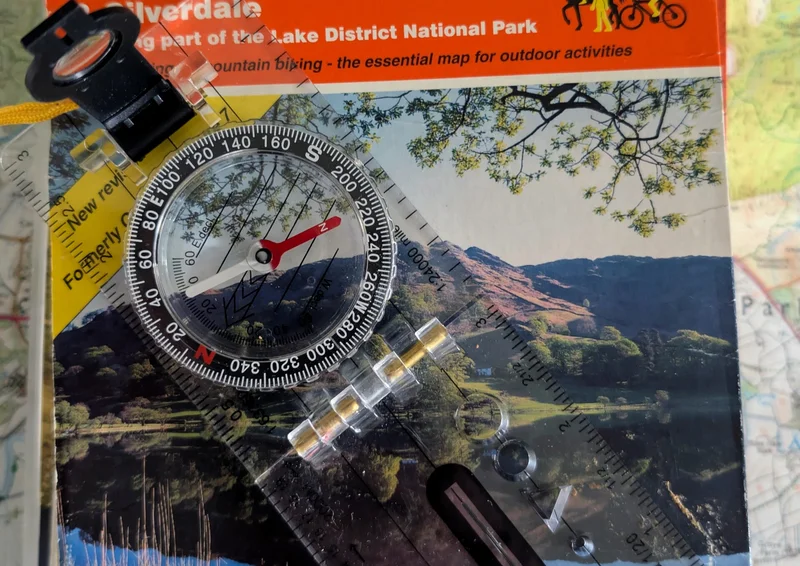
While digital data powers most OS revenue, consumer maps still play a significant role in brand visibility. The famous Explorer and Landranger map series are widely used by hikers, cyclists, and outdoor enthusiasts.

These maps create emotional connections with the brand. For many people, OS maps are associated with adventure, exploration, and the outdoors.

That emotional connection strengthens brand loyalty and keeps OS relevant in everyday life.

Digital Community and Developer Programs

Modern branding requires community engagement. OS actively supports developers, data scientists, and geospatial professionals through events, partnerships, and developer programs.

These initiatives help the organization maintain relevance in the rapidly evolving geospatial industry.

Competitive Positioning in the Geospatial Industry

OS vs OpenStreetMap and Other Mapping Platforms

The rise of collaborative mapping platforms such as OpenStreetMap introduced new competition in the geospatial ecosystem.

OpenStreetMap relies on crowdsourced data, while Ordnance Survey uses professional survey methods and official datasets.

Feature

Ordnance Survey

OpenStreetMap

Data Source

Professional surveyors

Community contributors

Accuracy

Highly standardized

Variable

Licensing

Mixed open and paid

Fully open

Authority

Government-backed

Community-driven

Rather than competing directly, OS focuses on precision, reliability, and official authority.

Lessons from Ordnance Survey’s Branding Strategy

The success of Ordnance Survey offers valuable lessons for organizations trying to build authority in their industries.

Key lessons include:

  • Build credibility through long-term consistency
  • Protect brand identity through trademarks and licensing
  • Invest in data quality and reliability
  • Adapt to technological change
  • Develop strong partnerships and ecosystems

These strategies have allowed OS to remain relevant for more than two centuries.

Conclusion

The branding and authority strategy of Ordnance Survey is a masterclass in institutional credibility and strategic evolution. Starting as a military mapping project in the 18th century, OS transformed into one of the world’s most respected geospatial organizations.

Its success comes from a powerful combination of heritage, accuracy, government backing, technological innovation, and strategic partnerships. By continuously evolving—from paper maps to digital geospatial infrastructure—Ordnance Survey has maintained its authority even in the era of global mapping platforms and open data initiatives.

For organizations seeking to build authority in the digital age, OS provides a powerful example: credibility is not built overnight. It grows through consistency, reliability, and the ability to adapt while protecting core brand values.

Frequently Asked Question

What is Ordnance Survey known for?

Ordnance Survey is the national mapping agency for Great Britain and is known for producing highly accurate geographic data and maps used by governments, businesses, and the public.

When was Ordnance Survey established?

The organization was formally established in 1791, although its origins date back to mapping projects following the Jacobite uprising of 1745.

What is OS MasterMap?

OS MasterMap is a detailed digital geospatial database that records millions of geographic features across Britain and is used for mapping, planning, and infrastructure management.

Is Ordnance Survey data free?

Some datasets are available through OS OpenData, but advanced datasets require licensing due to the costs of maintaining detailed geographic data.

Why is Ordnance Survey considered authoritative?

Its authority comes from government backing, centuries of mapping expertise, rigorous surveying standards, and the maintenance of Britain’s official geographic database.


Shopping Basket

times.software

Table of Contents