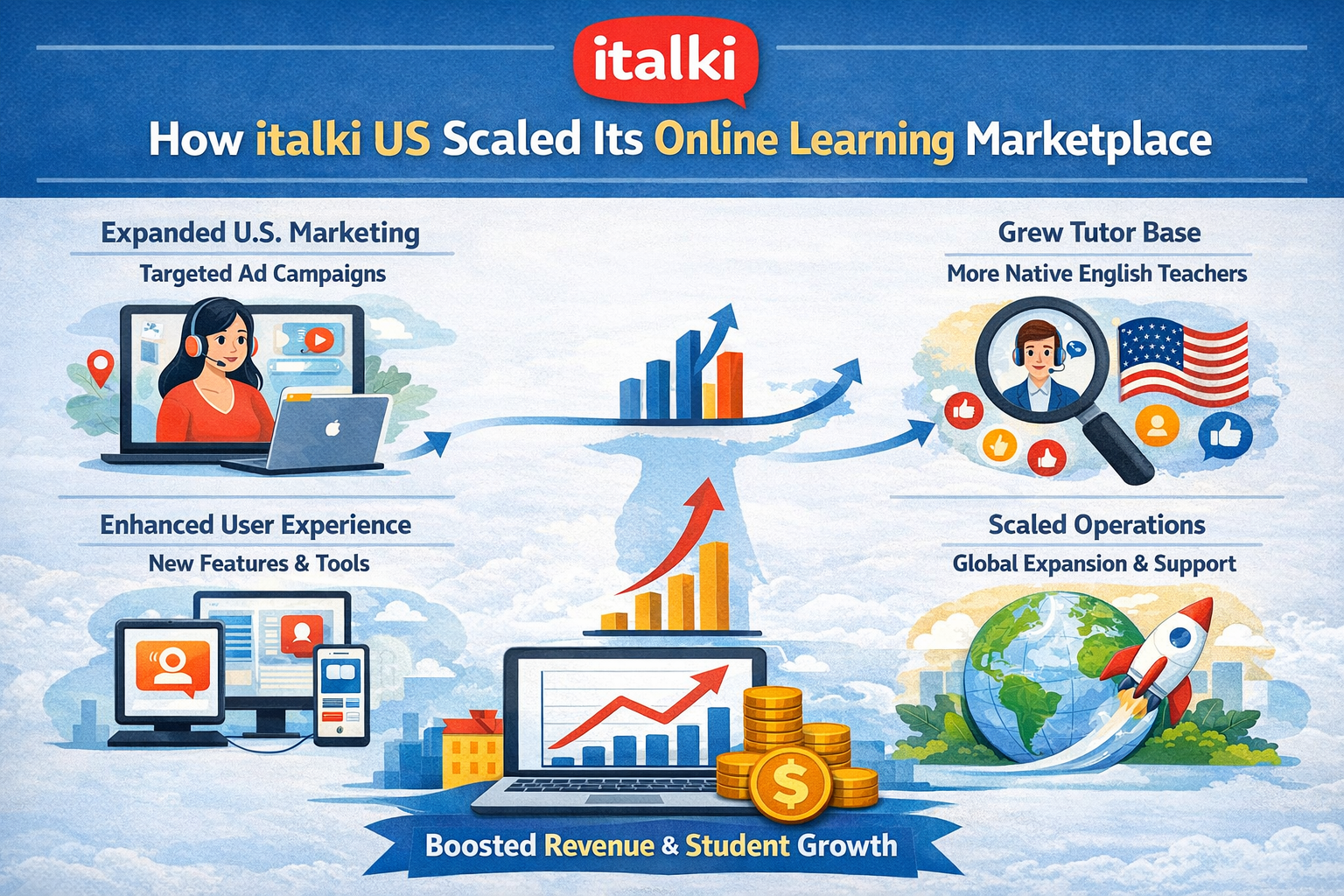
Discover how italki US successfully scaled its online learning marketplace by connecting millions of students with global language tutors through a powerful marketplace model, smart technology, and strategic digital growth.

Digital Marketing Agency
How italki US Scaled Its Online Learning Marketplace
Discover how italki US successfully scaled its online learning marketplace by connecting millions of students with global language tutors through a powerful marketplace model, smart technology, and strategic digital growth.
Table of Contents
ToggleThe rapid expansion of digital education has fundamentally transformed how people learn languages. Over the last decade, traditional classroom-based language education has slowly given way to online platforms that provide flexibility, accessibility, and global connectivity. One of the most interesting examples of this transformation is italki, an online marketplace that connects language learners with tutors across the world. The success of italki in the United States and internationally demonstrates how powerful marketplace models can scale when paired with the right technology and community.
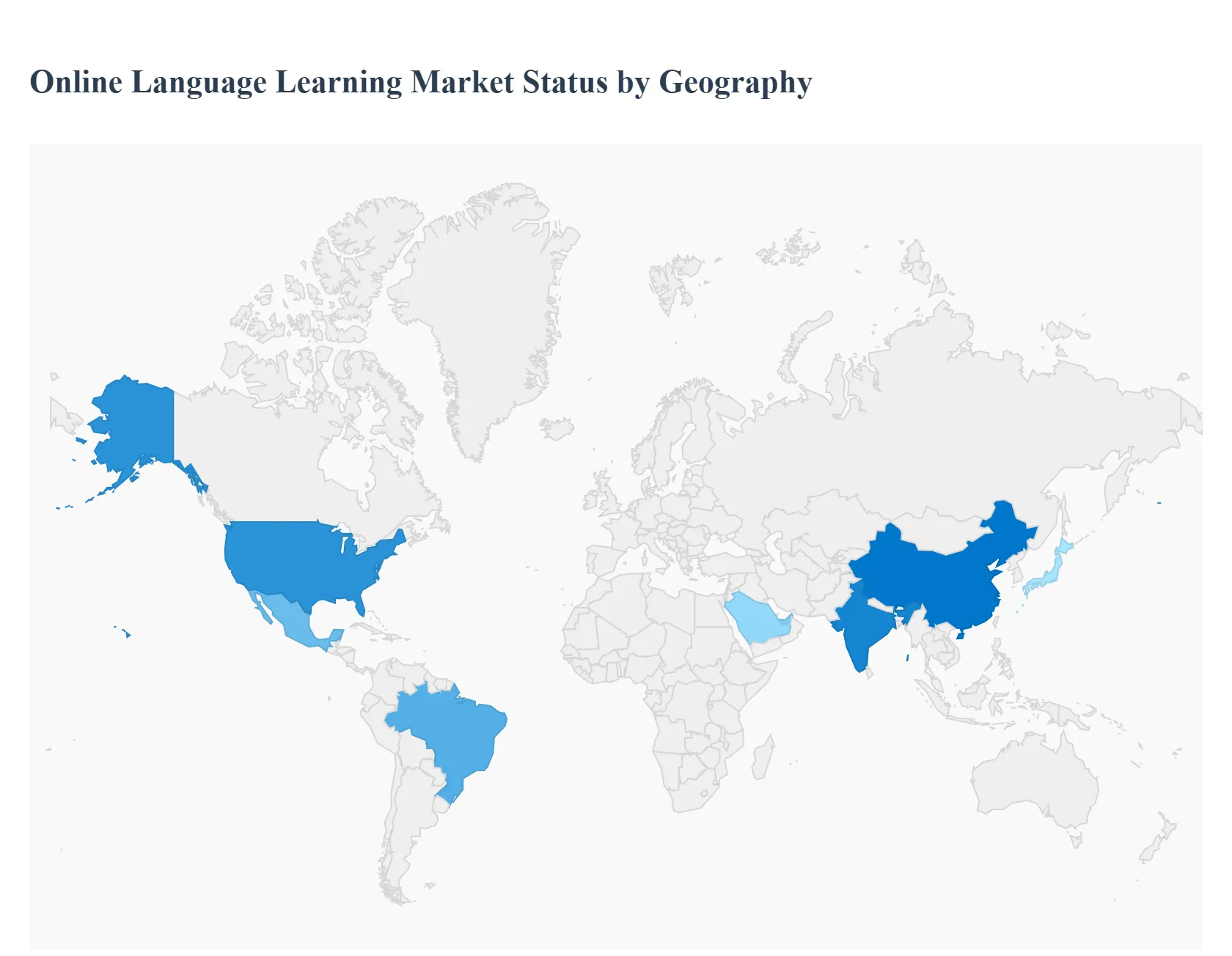
The demand for language learning has grown significantly due to globalization, remote work, international travel, and cross-border business collaboration. Reports show that the online language learning market was valued at about $21 billion in 2025 and is expected to reach more than $50 billion by 2031, growing at a strong annual rate. This massive growth created the perfect opportunity for platforms like italki to expand rapidly by providing digital tutoring services.
Unlike traditional learning platforms that rely on pre-recorded lessons, italki focused on connecting learners directly with real human tutors. This approach allowed students to practice real conversation while benefiting from flexible pricing and scheduling. As internet access and video communication tools improved globally, the demand for personalized language tutoring exploded. In the United States especially, professionals, students, and travelers increasingly sought convenient ways to learn languages online without attending formal classes.
Online language learning platforms have several advantages over traditional methods. First, they eliminate geographic barriers. Instead of searching locally for a tutor, learners can connect with native speakers anywhere in the world. This dramatically expands the pool of available teachers and learning styles. Second, online platforms offer convenience—students can schedule lessons anytime from their laptop or smartphone.
Another factor driving adoption is cost flexibility. Unlike language schools that charge fixed course fees, online marketplaces allow tutors to set their own rates. On platforms like italki, lessons can range from a few dollars per hour to premium professional tutoring sessions. This dynamic pricing model attracts both casual learners and serious students.
The rise of remote work and digital communication also accelerated the adoption of online learning tools. During the past few years, professionals realized that language skills can unlock international career opportunities. As a result, many learners prefer flexible online platforms rather than rigid classroom programs. The ability to practice live conversation with native speakers has become one of the strongest selling points of platforms like italki.
In short, the shift toward online education created a massive opportunity—and italki seized it by building a marketplace that connects millions of learners and teachers around the globe.
italki was founded in 2007 by Kevin Chen and Yongyue Jiang, originally as a social network for language learners who wanted to practice with native speakers online. The founders recognized that language learning is most effective when people actually speak with others rather than simply memorizing vocabulary from textbooks.
Initially, the platform focused on building a community where learners could exchange language tips, write essays, and practice conversations. However, as the community grew, users began requesting paid tutoring sessions. This demand led to the creation of italki’s teacher marketplace, which allowed professional instructors and community tutors to offer lessons online.
By 2017, the platform had already grown to over 3 million users in more than 100 countries and thousands of language teachers. Over time, the platform expanded even further, reportedly serving over 10 million learners globally and offering lessons in more than 150 languages.
The vision behind italki was simple but powerful: create a global marketplace where anyone could learn any language from a real person. This idea turned out to be incredibly scalable because the platform itself didn’t need to create course content—it simply connected learners and teachers.
At its core, italki operates like a marketplace similar to Airbnb or Uber—but for language education. Instead of connecting travelers with hosts or riders with drivers, it connects students with language tutors. This model allowed italki to scale rapidly without hiring thousands of teachers directly.
Teachers create profiles, set their own prices, upload introduction videos, and schedule lessons according to their availability. Students browse tutors based on language, price, rating, and specialization. Lessons usually take place through video conferencing platforms such as Zoom or Skype.
The beauty of this model lies in its flexibility. Teachers maintain independence, while students have full control over their learning experience. Some tutors specialize in exam preparation, while others focus on casual conversation practice or business language training.
This marketplace structure created a win-win ecosystem. Teachers earn money from anywhere in the world, while learners gain access to native speakers they might never meet otherwise.

One of the biggest reasons for italki’s success is its ability to connect people globally. The platform allows students to learn languages from native speakers in different countries, providing authentic cultural and linguistic experiences.
Instead of hiring full-time teachers, italki allows independent tutors to join the platform and offer lessons. This significantly reduces operational costs while dramatically expanding supply. Anyone with language skills can apply to become a tutor, whether they are professional teachers or community tutors.
As the number of tutors increases, the platform becomes more attractive to students. This creates what economists call network effects—the more participants join the marketplace, the more valuable the platform becomes.
For example, if a student wants to learn Korean, they can choose from dozens or even hundreds of Korean tutors on italki. This competition improves lesson quality while keeping prices competitive.
italki generates revenue through a commission-based system. Teachers set their own lesson prices, and the platform takes a percentage of each completed lesson. Typically, italki charges about a 15% commission fee on tutor earnings.
This model is extremely scalable because the platform earns revenue from every transaction without needing to create courses or hire teachers directly. As the number of lessons increases, so does the company’s revenue.
Estimates suggest that italki’s annual revenue may exceed $341 million per year, demonstrating the strength of its marketplace model.
Below is a simplified comparison of the marketplace model:
Feature | Traditional Language Schools | italki Marketplace |
Teacher Employment | Hired full-time | Independent tutors |
Pricing | Fixed course packages | Flexible tutor pricing |
Location | Physical classrooms | Online worldwide |
Revenue Model | Tuition fees | Commission per lesson |
The marketplace approach significantly lowers costs and accelerates scaling potential.
A key factor behind italki’s growth was its user-generated supply model. Instead of building a traditional teaching staff, the platform allowed tutors from around the world to join freely. This dramatically increased the number of available teachers.
Today, thousands of tutors teach languages ranging from English and Spanish to rare languages like Icelandic or Czech. The ability to learn almost any language from a native speaker became a powerful differentiator.
This approach also created a self-sustaining ecosystem. As more students joined the platform, more tutors applied to teach. This continuous cycle helped italki scale quickly without massive recruitment costs.
Another important factor in italki’s growth is personalization. Modern online platforms rely heavily on data to improve user experiences, and italki is no exception.
By analyzing user behavior, the platform recommends tutors, lesson types, and learning paths tailored to each student. These personalized recommendations increase engagement and encourage users to book more lessons.
In fact, personalized data strategies helped increase new user engagement by over 17% and improved re-engagement among inactive users by 25%.
These improvements demonstrate how technology can enhance marketplace growth.
Unlike many online learning platforms, italki also incorporates social learning features. Users can ask language questions, participate in discussions, write essays, and receive corrections from other learners or teachers.
This community aspect turns the platform into more than just a tutoring marketplace—it becomes a language learning ecosystem.
Students who engage with the community often remain active longer, which increases lifetime customer value.
Technology plays a crucial role in the success of any online marketplace. italki provides scheduling systems, messaging tools, and integrated lesson management features that make the learning experience smooth for both tutors and students.
Teachers can manage their calendars, accept bookings, and communicate with students through the platform. Students can filter tutors by time zone, price, rating, or specialization.
This infrastructure reduces friction in the learning process and makes scheduling lessons extremely easy.
Modern marketplaces rely heavily on recommendation systems. Similar to how Netflix suggests movies or Spotify suggests music, italki recommends tutors and lessons based on user behavior.
These recommendations improve user satisfaction and increase lesson bookings. By matching students with the right tutors, the platform ensures better learning outcomes and higher retention rates.
One of the most powerful growth drivers behind italki’s expansion in the US was search engine optimization (SEO) and content marketing.
Millions of people search online for phrases like:
By optimizing its content and landing pages for these keywords, italki attracts large volumes of organic traffic.
italki also partnered with language influencers, bloggers, and YouTube educators. Many language learning YouTubers recommend italki tutors as part of their learning strategies.
These partnerships significantly increased awareness and trust in the platform.
The online language learning industry is growing rapidly. The global market is projected to grow at over 13% annually, driven by globalization and digital education trends.
This expanding market created enormous opportunities for platforms like italki.
Today, italki operates in the expanding digital education sector with millions of users worldwide and significant revenue growth. Some estimates suggest the platform may generate hundreds of millions in annual revenue while serving millions of learners globally.
The platform’s ability to scale without hiring thousands of teachers makes it highly profitable compared to traditional education businesses.
Despite its success, italki faces competition from language learning apps like Duolingo, Babbel, and Preply. These platforms offer different learning experiences ranging from gamified lessons to structured tutoring programs.
Another challenge involves maintaining teaching quality while scaling. Since tutors operate independently, ensuring consistent quality across thousands of instructors can be difficult.
To address this, italki relies heavily on student reviews, ratings, and trial lessons.
Branding & Authority Strategy of Ordnance Survey Explained
How Spartan UK Is Winning with Data-Driven Digital Marketing
Trip.com ES Review: Is Trip.com ES the Best Travel Booking Platform in Spain?
How VideoScribe (US) Helps Businesses Create Engaging Marketing Videos
Your Parking Space Review: Is Your Parking Space Worth It in 2026
The future of language learning is likely to combine human tutoring with AI-powered learning tools. While apps can teach vocabulary and grammar efficiently, human conversation remains essential for achieving fluency.
Platforms like italki are well-positioned to benefit from this trend. As remote learning becomes more common, global marketplaces for skills and education will continue to grow.
For learners, the ability to practice languages with real people from around the world is invaluable. For teachers, the platform offers flexible income opportunities regardless of location.
Time-consuming and error-prone.
Cheap scrapers break easily and often violate compliance laws.
With automation, compliance, and scale, Bright Data is simply unmatched.
The success of italki US scaling its online learning marketplace is a powerful example of how digital platforms can transform education. By building a global marketplace connecting tutors and students, the company leveraged network effects, flexible pricing, and community-driven learning to expand rapidly.
The combination of technology, personalization, and a decentralized teaching model allowed italki to scale far beyond traditional language schools. With millions of learners worldwide and hundreds of millions in estimated revenue, the platform has proven that the future of education may lie in global marketplaces rather than classrooms.
As online learning continues to grow, italki’s marketplace model will likely inspire many other educational platforms in the coming years.
italki is an online language learning marketplace that connects students with tutors for one-on-one lessons via video calls. Students choose tutors, schedule lessons, and pay through the platform.
italki earns revenue by taking a commission—typically around 15%—from each lesson booked through the platform.
The platform offers lessons in 150+ languages, including English, Spanish, French, Chinese, and many lesser-known languages.
italki is popular because it offers flexible pricing, native-speaking tutors, personalized lessons, and the ability to learn from anywhere in the world.
italki focuses on real conversation with human tutors, while apps focus more on vocabulary and exercises. Many learners use both together for the best results
times.software
Table of Contents
×